Workstyle patternBeta

Adaptive Improviser

Read the situation and adjust.

  • Adaptive
  • Intuitive
  • Spontaneous
  • Open-ended

You read what a situation needs and adjust as you go, and you are comfortable starting before every detail is settled. Teams often rely on you when plans change, to find a workable route quickly and keep things moving through uncertainty.
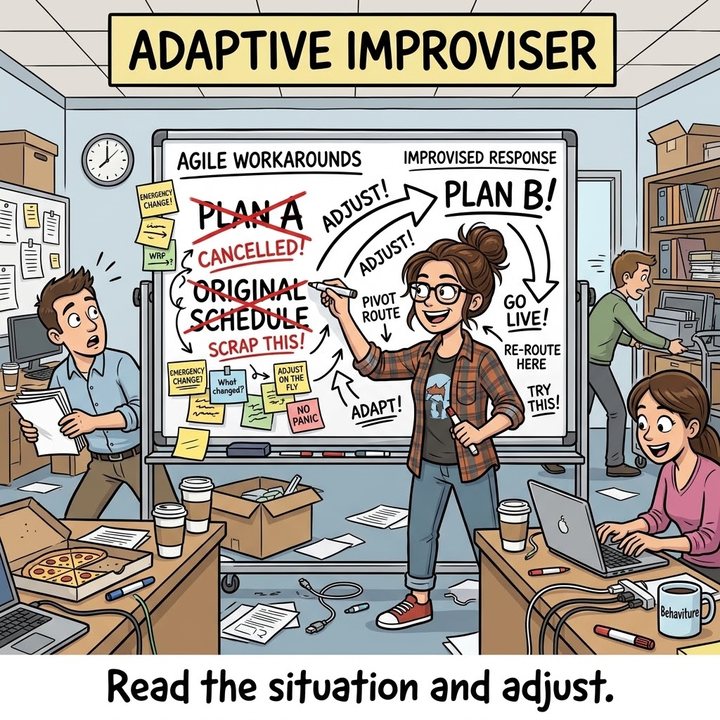
Adaptive Improviser illustration

Typical shape

The pattern a result is closest to, not a box: your own twelve scores are always shown as well.

Typically higher:

  • Adaptive Flexibility
  • Intuitive Synthesis
  • Concrete Grounding

Typically lower:

  • Structure Preference
  • Abstract Exploration

Strengths

  • Responds quickly when conditions change.
  • Handles ambiguity without needing everything defined first.
  • Finds a workable route quickly and starts moving along it.

Where this can cost you

  • May under-document the approach because the next move feels obvious in the moment.
  • Can find detailed plans more restrictive than the people who rely on them do.

Where it shines

Fast-moving, uncertain situations, such as incidents, early pilots and problems that do not match the script.

Where another style may fit the task

When precision, repeatability or a long audit trail matters, a more structured style may suit the task.

The other patterns

Beta. This is a new instrument and we are still checking how well it works, so treat your results as a prompt for reflection, not a verdict. Behaviture Workstyle Spectrum is designed for self-reflection and team development. It does not measure intelligence, mental health, job performance, or suitability for employment. Results describe self-reported tendencies and should not be used as the sole basis for employment decisions.